Go Back
- 1 whole turkey (12-14 pounds), fully thawed - 1 cup unsalted butter, softened to room temperature - 1 tablespoon fresh rosemary, finely chopped - 1 tablespoon fresh thyme, finely chopped - 1 tablespoon fresh sage, finely chopped - 2 cups low-sodium chicken broth - 1 onion, cut into quarters - 1 lemon, cut into quarters - 2 carrots, peeled and roughly chopped - 2 celery stalks, roughly chopped For the turkey, choose a size between 12 and 14 pounds. A whole turkey is best for roasting. The unsalted butter adds richness. Fresh herbs like rosemary, thyme, and sage bring great flavor. Use low-sodium chicken broth to keep it moist. The onion and lemon add a nice aroma. Carrots and celery add sweetness and depth. - 4 cloves garlic, finely minced - 2 teaspoons lemon zest - Salt and freshly ground black pepper, to taste Garlic adds a strong, savory taste. Mince it finely so it blends well. Lemon zest brings bright flavor. It enhances the butter and turkey. Use salt and pepper generously. They help to bring out all the flavors in the turkey. This blend of fresh herbs and spices creates a savory experience. Each bite will burst with flavor, making it a special meal. {{ingredient_image_2}} 1. Preheating the oven: First, set your oven to 325°F (165°C). This temperature is perfect for roasting and helps cook the turkey evenly. 2. Making the herb butter: In a medium bowl, mix 1 cup of softened butter, 4 cloves of minced garlic, and 1 tablespoon each of chopped rosemary, thyme, and sage. Add 2 teaspoons of lemon zest and a pinch of salt and pepper. Stir well to blend all the flavors. 1. Cleaning and drying the turkey: Remove the giblets and neck from the turkey cavity. Pat the turkey dry with paper towels, both inside and out. This step helps the skin get crispy. 2. Applying herb butter under the skin: Gently slide your fingers under the skin, especially around the breasts and thighs. Spoon half of the herb butter mixture under the skin. Spread it evenly for great flavor. 1. Stuffing the turkey for flavor: Fill the cavity with quartered onion, lemon, carrots, and celery. This adds moisture and flavor while roasting. 2. Cooking times and temperature guidelines: Place the turkey on a rack in a roasting pan. Pour 2 cups of low-sodium chicken broth into the pan to keep the turkey moist. Cover it loosely with foil and roast for about 2 to 2.5 hours. Use a meat thermometer to check that the thickest part of the thigh reaches 165°F (74°C). During the last 30 minutes, remove the foil to crisp the skin. Baste with pan juices every 15 minutes for added flavor. - Use low-sodium chicken broth. Pour it into the roasting pan. This keeps the turkey moist while it cooks. - Baste the turkey every 15 minutes. Use the pan juices to add flavor and moisture. This simple step works wonders for taste. - Remove the foil during the last 30 minutes. This helps the skin become golden and crispy. - Keep an eye on the turkey as it roasts. Adjust the oven temperature if needed for perfect browning. - Rest the turkey for at least 30 minutes before carving. This lets the juices spread throughout the meat. You will enjoy moist, tender slices. - Present the turkey on a large platter. Surround it with roasted veggies and fresh herbs for a stunning display. A side of cranberry sauce adds a pop of color and flavor. Pro Tips Resting is Key: Allow the turkey to rest for at least 30 minutes after roasting. This helps the juices redistribute, ensuring each slice is moist and flavorful. Use a Meat Thermometer: For perfectly cooked turkey, use a meat thermometer to check that the thickest part of the thigh reaches 165°F (74°C). This guarantees safety and optimal juiciness. Flavorful Broth: Instead of plain water, use low-sodium chicken broth in the roasting pan. This will enhance the turkey's flavor and keep it moist during cooking. Herb Butter Variations: Experiment with different herbs in the butter. Fresh herbs like tarragon or parsley can add unique flavors to your turkey, making it a signature dish. {{image_4}} You can change up the herbs in this recipe to fit your taste. If you want a different flavor, try using: - Thyme for a sweet, earthy taste - Oregano for a hint of Mediterranean flair - Basil for a fresh, bright twist You can also add fruits or nuts to the mix. For fruit, think about using: - Dried cranberries for a sweet touch - Chopped apples for a crisp texture For nuts, consider adding: - Chopped pecans for a rich flavor - Walnuts for a slight bitterness These tweaks can make your turkey unique and exciting. You don’t have to stick with just roasting. You can try deep frying for a different result. Deep frying gives you a crispy skin and juicy meat. Just remember to cook it safely. You can also use a slow cooker. This method keeps the turkey very moist. It takes longer, but the flavors deepen as it cooks. Just set it on low for 6 to 8 hours. Choose the method that suits your style and enjoy your meal! To keep your turkey fresh after the feast, refrigerate it in an airtight container. Cut the turkey into smaller pieces to cool faster. Store leftover turkey within two hours of cooking. This helps to prevent bacteria. Use your turkey within three to four days for the best taste. If you want to save it for longer, freezing is a great option. Wrap the turkey tightly in plastic wrap, then place it in a freezer bag. Try to remove as much air as possible. This helps to avoid freezer burn. Frozen turkey can last up to six months. Label the bag with the date. When you reheat turkey, you want to keep it moist. One good method is to use the oven. Preheat your oven to 325°F (165°C). Place the turkey in a baking dish and add a bit of broth or water. Cover it with foil to trap steam. Heat for about 20 minutes per pound. You can also use the microwave for quick reheating. Slice the turkey into thin pieces for even heating. Place it on a microwave-safe plate with a splash of broth. Cover it loosely with a microwave-safe lid or paper towel. Heat in short bursts, checking every minute. Both methods will help make sure your turkey stays juicy and tasty. Enjoy your delicious leftovers! A turkey takes about 13 to 15 minutes per pound to cook. For example, a 12-pound turkey needs around 2.5 to 3 hours at 325°F. Use a meat thermometer to check the thickest part of the thigh. It should read 165°F for safe eating. Always let the turkey rest after cooking. This helps keep it juicy and flavorful. If your turkey is still frozen, do not cook it. You can thaw it in cold water. Submerge the turkey in its packaging. Change the water every 30 minutes. It takes about 30 minutes per pound to thaw this way. If you need to cook it frozen, add another 50% to your cooking time. Just make sure it reaches 165°F. Yes, you can make herb butter days in advance. Mix your ingredients and store in an airtight container. Keep it in the fridge for up to a week. For longer storage, freeze it in small portions. This way, you can just grab what you need later. Classic sides work great with herb butter roasted turkey. Consider serving: - Mashed potatoes - Green bean casserole - Cranberry sauce - Stuffing - Roasted vegetables These dishes complement the turkey's rich flavor. They also make your meal look colorful and inviting. You learned how to prepare a delicious turkey step-by-step. We covered key ingredients like whole turkey, herb butter, and important seasonings. I shared tips for keeping it moist and achieving crispy skin, plus how to carve and serve effectively. With various cooking methods and flavor substitutions, you can customize your turkey to suit any taste. Remember to store leftovers properly and reheat for the best experience. Enjoy your turkey with confidence this holiday season!

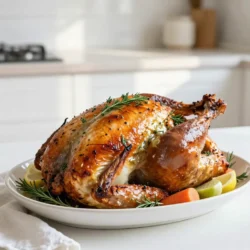
Savory Herb Butter Roasted Turkey

A flavorful roasted turkey infused with herb butter and aromatic vegetables.
Prep Time 30 minutes
Cook Time 2 hours 30 minutes
Total Time 4 hours
Course Main Course
Cuisine American
Servings 10

Ingredients
  

  • 1 whole turkey (12-14 pounds), fully thawed
  • 1 cup unsalted butter, softened to room temperature
  • 4 cloves garlic, finely minced
  • 1 tablespoon fresh rosemary, finely chopped
  • 1 tablespoon fresh thyme, finely chopped
  • 1 tablespoon fresh sage, finely chopped
  • 2 teaspoons lemon zest (from about 1 lemon)
  • to taste Salt and freshly ground black pepper
  • 2 cups low-sodium chicken broth
  • 1 whole onion, cut into quarters
  • 1 whole lemon, cut into quarters
  • 2 whole carrots, peeled and roughly chopped
  • 2 stalks celery, roughly chopped

Instructions
 

  • Preheat the Oven: Set your oven to 325°F (165°C) and position the oven rack in the lower third for optimal roasting.
  • Make the Herb Butter: In a medium mixing bowl, combine the softened butter, minced garlic, chopped rosemary, thyme, sage, lemon zest, and a generous pinch of salt and pepper. Mix thoroughly until all the herbs are evenly incorporated into the butter.
  • Prep the Turkey: Empty the cavity of the turkey by removing the giblets and neck. For a perfectly crisp skin, pat the turkey dry inside and out with paper towels.
  • Apply the Herb Butter: Carefully loosen the skin of the turkey, particularly around the breast and thighs, by gently sliding your fingers underneath. Spoon half of the herb butter mixture under the skin, spreading it evenly to enhance the meat's flavor.
  • Coat the Exterior: Rub the remaining herb butter generously all over the outer skin of the turkey, ensuring no spot is left without flavor. This helps to achieve a beautiful golden-brown crust.
  • Stuff for Flavor: Fill the cavity of the turkey with the quartered onion, lemon, carrots, and celery. This will create aromatic steam that will infuse the turkey with flavor as it roasts.
  • Prepare for Roasting: Place the turkey on a roasting rack inside a large roasting pan. Pour the chicken broth into the bottom of the pan—this will keep the turkey moist throughout the cooking process.
  • Roast the Turkey: Loosely cover the turkey with aluminum foil to prevent over-browning, and roast in the preheated oven for about 2 to 2.5 hours. The turkey is done when a meat thermometer inserted into the thickest part of the thigh reads 165°F (74°C).
  • Crisp the Skin: During the final 30 minutes of roasting, remove the foil to allow the skin to become beautifully crispy. Baste the turkey with the pan juices every 15 minutes for extra flavor and moisture.
  • Rest and Carve: Once fully cooked, carefully remove the turkey from the oven and let it rest for at least 30 minutes before carving. Resting allows the juices to redistribute throughout the meat, ensuring each slice is moist.
  • Serve: Carve the turkey and serve it warm, drizzled with the pan drippings, and garnished with fresh herbs for a beautiful presentation.

Notes

For an elegant touch, arrange the carved turkey on a large serving platter, surrounded by the roasted vegetables and garnished with sprigs of fresh herbs. Consider serving with a side of cranberry sauce for a delightful contrast.
Keyword herb butter, roast, Thanksgiving, turkey